Category Archives: Preferential Trade

Madagascar’s textile firms lobby for AGOA preferences

From page 7 of today’s Politico:

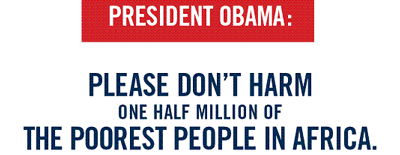
Mada_AdBanner_Politico_400

That’s the top of an advertisement paid for by the owners of apparel factories in Madagascar and one of their American investor partners, lobbying the US to extend AGOA preferences for textile exports. 28,000 workers signed the petition.

See Aid Watchers for the full story. Here’s an academic piece on foreign lobbying and US trade policy.

Madagascar's textile firms lobby for AGOA preferences

From page 7 of today’s Politico:

Mada_AdBanner_Politico_400

That’s the top of an advertisement paid for by the owners of apparel factories in Madagascar and one of their American investor partners, lobbying the US to extend AGOA preferences for textile exports. 28,000 workers signed the petition.

See Aid Watchers for the full story. Here’s an academic piece on foreign lobbying and US trade policy.

Firms can't answer the questions we have about PTAs

Masahiro Kawai and Ganeshan Wignaraja try to use an ADB survey of Asian firms to assess the Asian “noodle bowl” of preferential trade agreements:

Properly designed FTAs keep trade and FDI flowing, even when crisis strikes. Yet, the plethora of overlapping and complex FTAs in East Asia carries the risk of becoming unwieldy and making business cumbersome. Influenced by Jagdish Bhagwati’s famous remark about a spaghetti bowl of FTAs, critics argue that the explosion of deals, with complex rules and variable tariffs, has increased transaction costs, particularly for small- and medium-sized enterprises (SMEs) – those that can least afford them (see Bhagwati, 2008 for an excellent synthesis). They also argue that the multiplicity of bilateral and plurilateral deals hinders the broader push toward a global trade agreements. The spaghetti bowl phenomenon is popularly known as the “noodle bowl” effect in Asia and has led Richard Baldwin and Philip Thornton (2008) to propose a “WTO Action Plan on Regionalism” that includes deepening of the transparency mechanism for FTAs.

For the first time, the ADB study on FTAs sought the views of those most directly affected – the region’s export-oriented firms. The results showed that these businesses view FTAs as a benefit rather than a burden and use them to expand trade to a far greater degree than had been previously thought. The benefits of FTAs include wider market access and preferential tariffs that make it easier to import intermediate materials needed for finished goods. Multiple country rules of origin (ROOs), which determine where goods originate from for a variety of purposes, including quotas and labelling, may add some administrative and transaction costs. But the large majority of exporters do not view ROOs as a significant hindrance to business activity. In addition, bilateral and plurilateral FTAs counter protectionist tendencies amid the current economic uncertainty. They provide a valuable stepping stone toward broader trade liberalisation in support of economic recovery.

Unfortunately, this is not compelling evidence. Surveying firms is simply not a persuasive means of assessing the costs and dangers identified by skeptics of preferential trade. Questions about exporters’ preference utilization and perceived trouble with rules of origin cannot answer questions like:

  • Do PTAs dampen protectionist pressures or just shift them onto less-preferred trading partners?
  • Do PTAs divert political energy away from multilateral negotiations – are they building blocks or stumbling blocks?
  • Do these PTAs create more trade than they divert?
  • Will latecomers in the PTA race find themselves forced to join agreements that favor the first movers, through mechanisms such as decisions on technical barriers to trade?

It’s good to collect evidence on preference utilization (28% of firms utilize some preferences, though that’s not as meaningful as evidence on the percentage of trade flows that utilize preference), but this survey doesn’t answer any of the big questions about Asia’s noodle bowl.

The case for preferential trade with Africa

Karol Boudreaux criticizes Jendayi Frazer for advocating preferential trade with Africa. She writes:

I’m only going to discuss one of her recommendations, which is this: do not extend AGOA trade preferences to a small subset of developing nations that includes some south Asian and some Islamic nations. Ms. Frazer argues: “extending the same trade preferences to hypercompetitive Cambodia and Bangladesh—each of which individually exports more apparel to the U.S. than all of sub-Saharan Africa combined—will undermine the program’s success in Africa.” Here’s a link to the proposed legislation that would expand the trade bill — it’s currently in committee.

But note that the success Ms. Frazer identifies is based on playing favorites. Maybe African producers should be favored over Bangladeshi producers, but on what grounds? A different version of this question would be: “why should African manufacturers be shielded from competition from other developing world producers?”

Boudreaux condemns such preferences as “favoritism” and “protectionism” and argues that more liberal, open trade (combined with better governance) offers the best path for African growth and development. Perhaps. But shouldn’t Boudreaux at least address the respectable economic arguments underpinning the idea that African economies need a foothold to establish nascent industries? Paul Collier and Tony Venables have argued the case for AGOA on such grounds, both in a VoxEU column and in an article in The World Economy.

Africa has lagged behind partly because its economic reforms lagged those of Asia. When export diversification started to boom in Asia in the 1980s, no mainland African country provided a comparable investment climate. Now a number of African cities — Accra, Dakar, Mombassa, Maputo and Dar-es-Salaam, etc. – offer reasonable investment climates, but they cannot compete with Asian cities that have comparable investment climates since the Asian cities have established clusters of firms in the new export sectors. Such clusters provide firms in the cluster with the advantages of shared knowledge, availability of specialist inputs and a developing pool of experienced labour. A classic chicken-and-the-egg problem.

Until African cities can establish such clusters, firms located in Africa face costs that will be above those of Asian competitors, but because costs are currently higher individual firms have no incentive to relocate. If Africa is to diversify its exports and create employment it must develop such efficient clusters of modern sector activity. Where it is feasible, this offers a more reliable development path than the commodity extraction model which Africa has followed to date.

Trade preferences offer a potential solution to the chicken-and-the-egg problem

Boudreaux may be right about the value of trade preferences, but her blog post solely discusses static comparative advantage and competitiveness, whereas industrialization and development is also about dynamic comparative advantage and export diversification.
An African trade bloc

All Africa:

Preparations to have a free trade zone across Africa’s three economic blocs are in high gear, Juma Mwapachu, the East Africa Community (EAC) Secretary General has said.

The efforts are a result of a tripartite summit held in Kampala last year, where heads of state from the three regional blocs; EAC, Common Market for Eastern and Southern Africa (COMESA), and the Southern African Development Community, (SADC) agreed on the expeditious establishment of a free trade bloc.

“We are at the stage where we are about to complete the technical study which will determine what form of free trade area we should have,” Mwapachu told journalists at the just concluded EAC media summit in Kampala.

The study, being conducted by a consultancy firm from the three blocs, will define the institutional arrangements required and a roadmap towards the establishment of the free trade area.

Multilateralizing Regionalism (with a z)

A behemoth of a book was released by the WTO today – Multilateralizing Regionalism: Challenges for the Global Trading System, edited by Richard Baldwin and Patrick Low, contains the papers and comments from 2007’s WTO conference on Multilateralising Regionalism. Multilateralizing Regionalism should not be confused with Multilateralising Regionalism by Richard Baldwin and Philip Thornton.

WTO launches PTA database

Watch out McGill! The World Trade Organization just launched its own exhaustive database of preferential trade agreements, in force and under negotiation. Kudos to McGill for doing it first and naming its page the “Preferential Trade Agreements Database,” as the WTO just looks silly when listing  the Canada-Singapore and US-Oman deals as “regional trade agreements.”

Building blocks vs stumbling blocks in Latin America

A new discussion paper by Antoni Estevadeordal, Caroline Freund, and Emanuel Ornelas says that regional trade deals amongst Latin American countries have been building blocks for multilateral liberalization — “there is strong evidence that preferences induce a faster decline in external tariffs in free trade areas“.

This contrasts with Nuno Limão’s results for the United States and Europe, where “multilateral tariff reductions in PTA goods were smaller than those in similar goods not imported from PTA partners.”

Do US PTAs pave the way for subsidized exports?

I question Oxfam’s critique of the (yet-to-be-implemented) preferential trade agreement between Peru and United States. Oxfam’s Song of the Sirens report alleges:

According to the agreements signed, Colombia and Peru ‘shall not apply any price band system to agricultural goods imported from the United States’, thereby leaving national producers unprotected and exposed to the mercy of duty-free US imports.
US insistence on the dismantling of the price band system leaves the Andean countries with no alternative means of protection to counteract the effects of US subsidies [emphasis added]. It is also further evidence of double standards in US foreign trade policy. Oxfam believes that, insofar as the USA continues to provide extensive subsidies which lead to unfair trade practices, it should uphold the protection mechanisms used by developing countries to safeguard their most vulnerable domestic sectors.

The agreement’s Chapter 8, Section B:

1. Each Party retains its rights and obligations under the WTO Agreement with regard to the application of antidumping and countervailing duties.

2. No provision of this Agreement, including the provisions of Chapter Twenty-One (Dispute Settlement), shall be construed as imposing any rights or obligations on the Parties with respect to antidumping or countervailing duty measures.

So if the United States wrongly subsidizes agricultural exports, why can’t Peru just impose countervailing duties? As far as I know, CVDs can be applied to anything that isn’t green box. Oxfam’s report doesn’t mention CVDs — surely it should have. Can anyone explain their claim? Are US PTAs really paving the way for subsidized agricultural exports?

An anti-MFN clause

Ever seen Article 14 of the Panama-Costa Rica 1973 preferential trade agreement? It’s an anti-MFN clause:

The Contracting Parties agree not to grant, through a most favored nation clause, the concessions they grant to each other through this Treaty now or in the future to third countries from outside Central America with whom they may sign trade treaties or conventions.

The two countries signed a PTA in 2007, which probably didn’t include such nonsense, though I can’t find the text.

[Hat tip: Lorand Bartels]