Madagascar's textile firms lobby for AGOA preferences

From page 7 of today’s Politico:

Mada_AdBanner_Politico_400

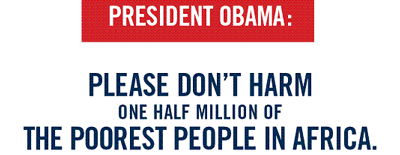
That’s the top of an advertisement paid for by the owners of apparel factories in Madagascar and one of their American investor partners, lobbying the US to extend AGOA preferences for textile exports. 28,000 workers signed the petition.

See Aid Watchers for the full story. Here’s an academic piece on foreign lobbying and US trade policy.

Madagascar’s textile firms lobby for AGOA preferences

From page 7 of today’s Politico:

Mada_AdBanner_Politico_400

That’s the top of an advertisement paid for by the owners of apparel factories in Madagascar and one of their American investor partners, lobbying the US to extend AGOA preferences for textile exports. 28,000 workers signed the petition.

See Aid Watchers for the full story. Here’s an academic piece on foreign lobbying and US trade policy.

Abstracts that caught my eye

Mary Amiti and David Weinstein:

A striking feature of many financial crises is the collapse of exports relative to output. In the 2008 financial crisis, real world exports plunged 17 percent while GDP fell 5 percent. This paper examines whether the drying up of trade finance can help explain the large drops in exports relative to output. This paper is the first to establish a causal link between the health of banks providing trade finance and growth in a firm’s exports relative to its domestic sales. We overcome measurement and endogeneity issues by using a unique data set, covering the Japanese financial crises of the 1990s, which enables us to match exporters with the main bank that provides them with trade finance. Our point estimates are economically and statistically significant, suggesting that trade finance accounts for about one-third of the decline in Japanese exports in the financial crises of the 1990s.

James Feyrer:

The negative effect of distance on bilateral trade is one of the most robust findings in international trade. However, the underlying causes of this negative relationship are less well understood. This paper exploits a temporary shock to distance, the closing of the Suez canal in 1967 and its reopening in 1975, to examine the effect of distance on trade and the effect of trade on income. Time series variation in sea distance allows for the inclusion of pair effects which account for static differences in tastes and culture between countries. The distance effects estimated in this paper are therefore more clearly about transportation costs in the trade of goods than typical gravity model estimates. Distance is found to have a significant impact on trade with an elasticity that is about half as large as estimates from typical cross sectional estimates. Since the shock to trade is exogenous for most countries, predicted trade volume from the shock can be used to identify the effect of trade on income. Trade is found to have a significant impact on income. The time series dimension allows for country fixed effects which control for all long run income differences. Because identification is through changes in sea distance, the effect is coming entirely through trade in goods and not through alternative channels such as technology transfer, tourism, or foreign direct investment.

Pierce & Schott: A Concordance Between HTS & SIC/NAICS

This paper looks like it may be helpful to applied empirical researchers:

This paper provides and describes concordances between the ten-digit Harmonized System (HS) categories used to classify products in U.S. international trade and the four-digit SIC and six-digit NAICS industries that cover the years 1989 to 2006. We also provide concordances between ten-digit HS codes and the five-digit SIC and seven-digit NAICS product classes used to classify U.S. manufacturing production. Finally, we briefly describe how these concordances might be applied in current empirical international trade research.

This week’s WTO ministerial

The WTO’s Seventh Ministerial Conference starts on Monday. Demonstrations, arson, and arrests started Saturday.

In his report to the General Council on 17 November 2009, Pascal Lamy said that while the upcoming WTO Ministerial Conference would not be a negotiating session, it would be “a platform for ministers to review the functioning of this house”, including the Doha Round, and an occasion “to send a number of strong signals to the world with respect to the entire WTO waterfront of issues — from monitoring and surveillance to disputes, accessions, Aid for Trade, technical assistance and international governance”. [WTO]

Police fired tear gas and rubber bullets Saturday to separate violent demonstrators from a protest of a meeting of top world trade officials, but the hooded “black bloc” activists were able to cause damage before 14 were arrested, spokesmen said. The protesters set fire to at least four cars, broke shop windows and committed other acts of violence Saturday, police spokesman Patrick Puhl said. [AP]